
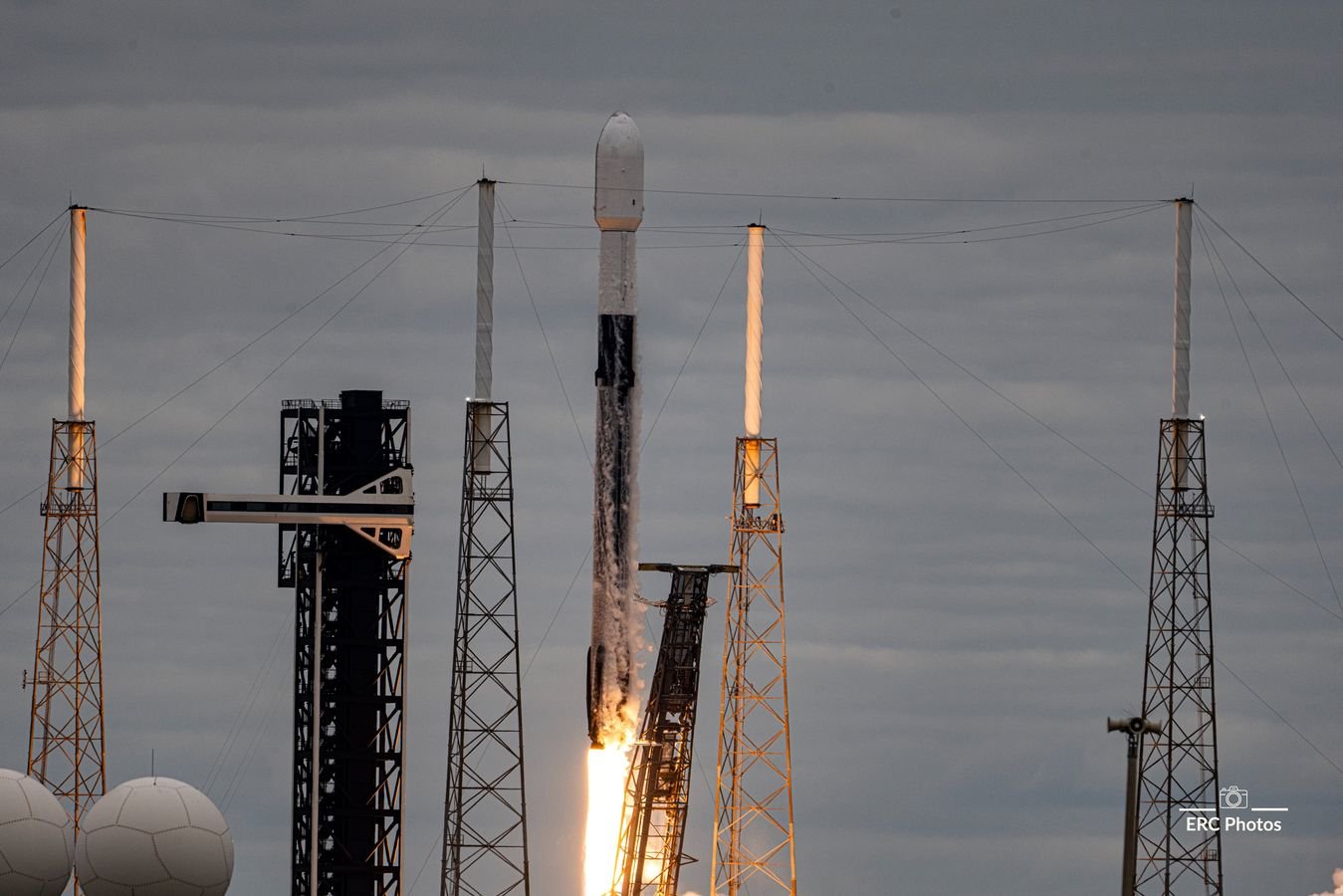
Elon Musk led SpaceX’s Falcon 9 successfully launched rocket successfully launched India’s heavy communication satellite GSAT-20 (GSAT N-2). The launch took place from Cape Canaveral in the US, ISRO’s commercial arm NewSpace India Limited (NSIL). It is India’s first collaboration with Musk’s SpaceX.
The Falcon 9 lifted off at 12:01am on November 19 from Cape Canaveral Space Force Station in Florida and put the NSIL’s GSAT-N2 to a geosynchronous transfer orbit from Space Launch Complex 40 (SLC-40).
Earlier, India relied on France’s launch service provider Arianespace for heavy satellite launches, but since the company didn’t have any operational rockets at present, India opted for SpaceX whose Falcon 9 rocket can launch payloads of 8,300 kg or 8.3 tonnes to geostationary transfer orbit.
According to SpaceX, it was the 19th flight for the Falcon 9 first stage booster supporting this mission, which previously launched SES-22, ispace’s HAKUTO-R MISSION 1, Amazonas-6, CRS-27, Bandwagon-1, and 13 Starlink missions.
The GSAT N-2 satellite features ka-ka transponders of NSIL, which is the commercial arm of ISRO. Its capacity of 32 beams with 48 Gbps throughput will cover India, including Andaman and Nicobar and Lakshadweep islands and cater to broadband and Inflight and Maritime Telecom Connectivity (IFMC) service needs of the country.
Salient Features of the satellite:
The satellite consists of three parabolic 2.5-meter deployable reflectors with multiple feeds generating 32 spot beams.
The Ka-Band HTS communication payload provides a throughput of approximately 48 Gbps.
The GSAT satellite is equipped with 32 user beams, comprising 8 narrow spot beams over the Northeast region.
The satellite has 24 wide spot beams over the rest of India. These 32 beams will be supported by hub stations located within India mainland.