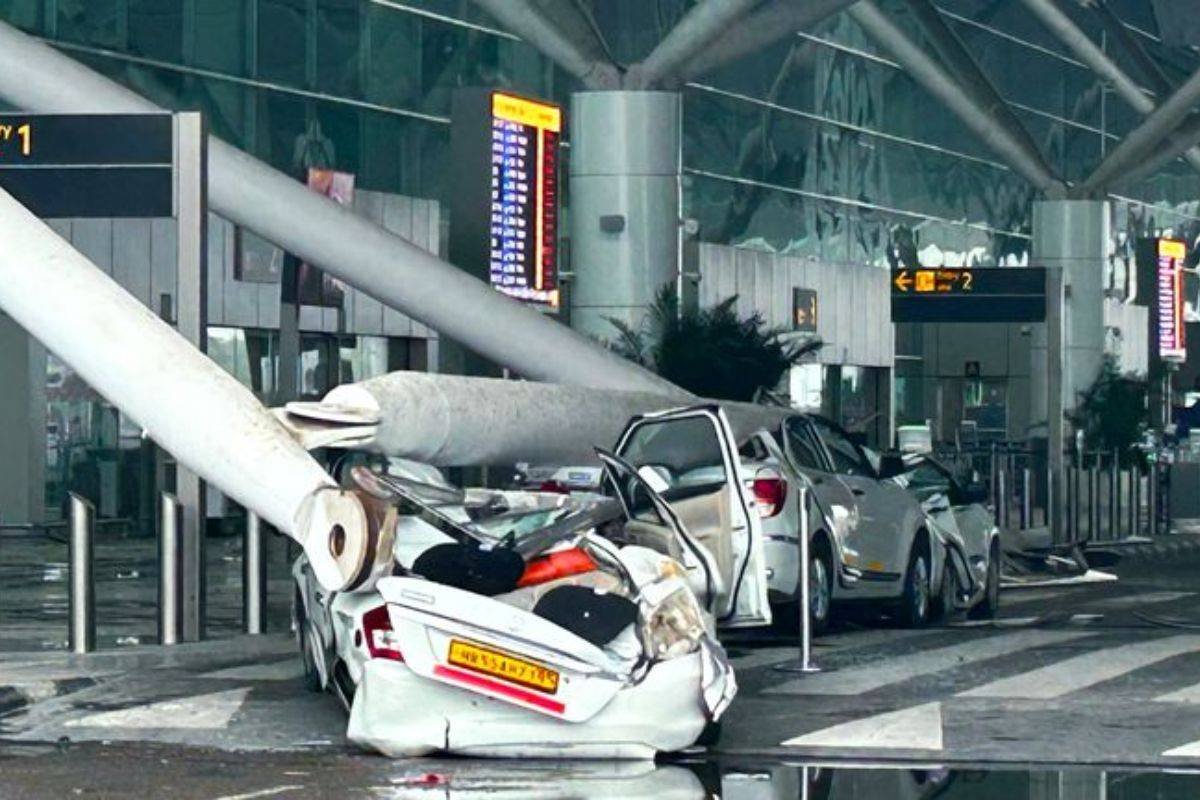
NEW DELHI: Heavy rainfall and strong winds wreaked havoc in India’s capital on Friday, leading to a roof collapse at Indira Gandhi International Airport. The incident resulted in the tragic death of one person and left eight others injured with several cars enshrouded by debris, while also causing significant disruption to flights from the domestic terminal.
The severe weather not only impacted the airport but also brought daily life to a standstill across the city. Flooded streets and severe traffic jams plagued the main roads leading to the airport, complicating the situation further and hindering emergency response efforts.
Eyewitnesses at the scene described the chaos as the airport staff and passengers were caught off guard by the sudden roof collapse. “It was a terrifying experience,” one witness recounted. “The wind was howling, and then the roof just came down with a loud crash.”
Authorities at the airport were quick to respond, evacuating the affected areas and providing immediate medical attention to the injured. The deceased and the injured have not yet been identified, and their families are being notified.
Flights were either delayed or diverted as crews worked to secure the area and assess the damage. Passengers experienced significant delays and cancellations, adding to the frustration and chaos at the already busy airport.
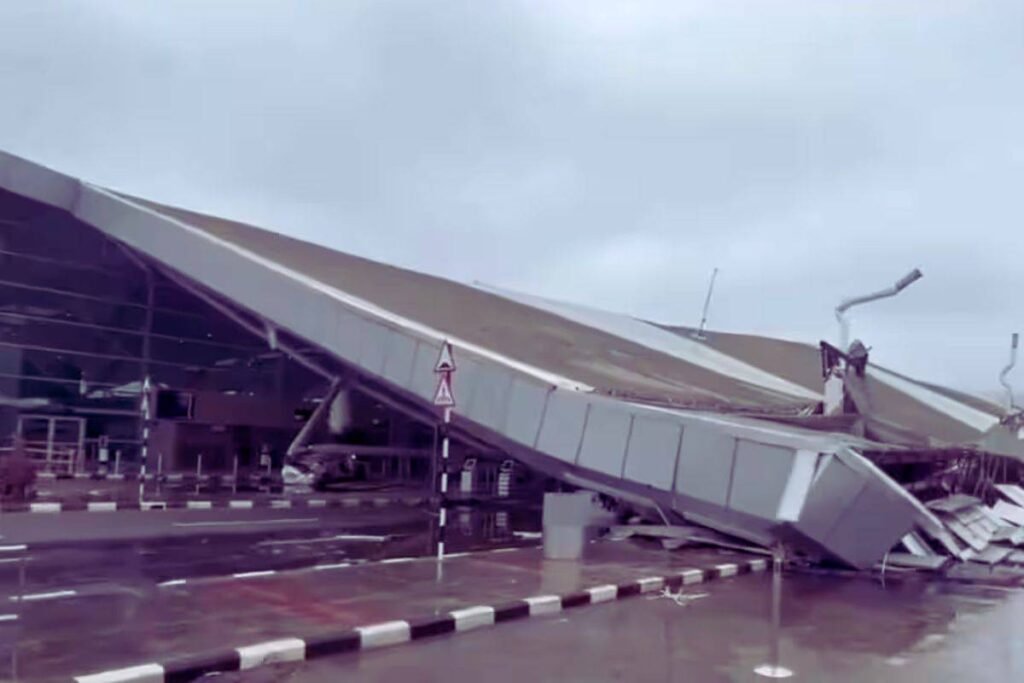
In the broader city, the heavy rains led to widespread flooding, making many roads impassable. Commuters were stuck in prolonged traffic snarls, and public transportation was severely disrupted. The municipal authorities have issued advisories urging people to stay indoors and avoid non-essential travel.
Emergency services are on high alert, and efforts are underway to clear the waterlogged streets and restore normalcy. The Delhi government has promised a thorough investigation into the airport incident and has pledged to improve infrastructure to prevent such occurrences in the future.
This weather-related tragedy at one of India’s busiest airports underscores the urgent need for robust infrastructure capable of withstanding extreme weather events. As the city grapples with the aftermath, the focus remains on ensuring the safety and well-being of all its residents and visitors.
The severe weather not only impacted the airport but also brought daily life to a standstill across the city of 20 million people. New Delhi received 228.1 mm of rainfall at its main Safdarjung weather station in the 24 hours ending at 8:30 am on Friday, marking a 266% departure from normal.
Flooded streets and severe traffic jams plagued the main roads leading to the airport, complicating the situation further and hindering emergency response efforts. The deluge turned several parts of the city into virtual rivers including Sangam Vihar of south Delhi, making daily commuting a nightmare for residents.
BJP leader Vijay Jolly has voiced strong criticism against the sitting Aam Aadmi Party (AAP) legislator, Dinesh Mohania, for his alleged failure to improve infrastructure in Sangam Vihar, particularly highlighting the recent rain calamity in terms of a rainwater harvesting plan that can be reused during depleting ground water level.