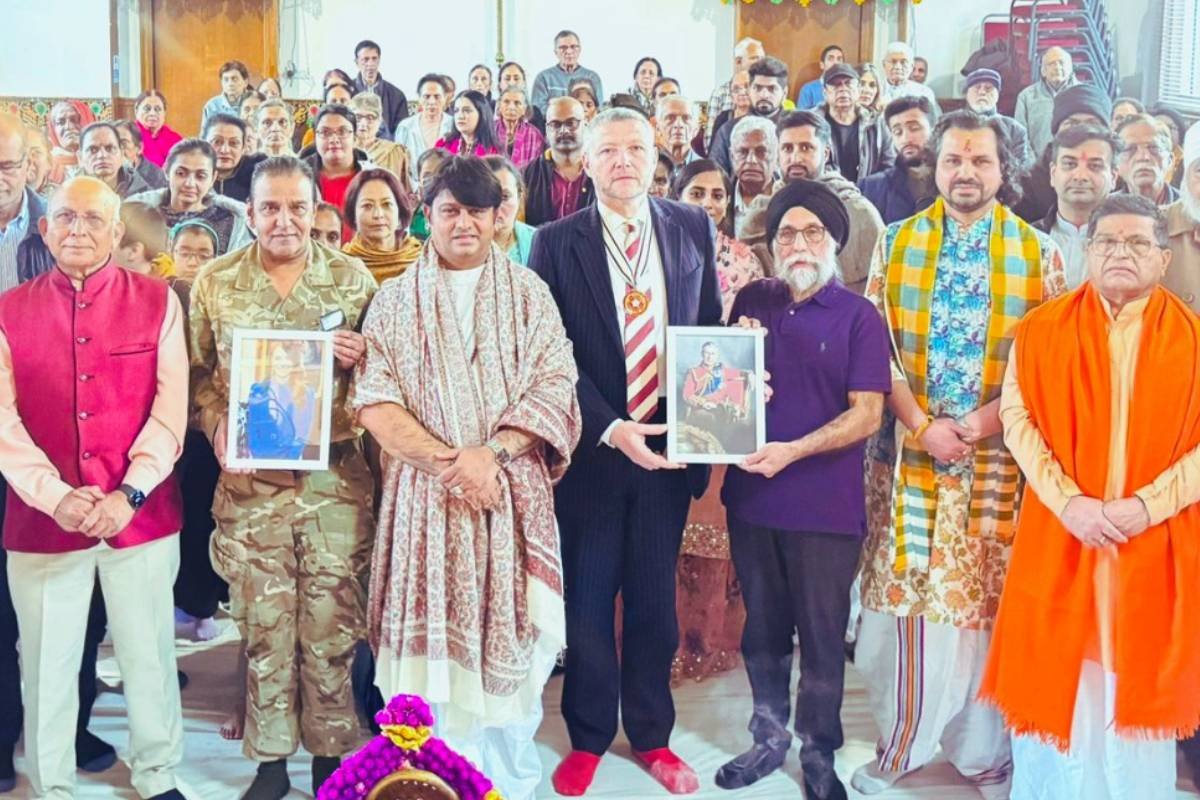
LONDON: In heartfelt solidarity, empathy and compassion for longevity, prosperity and healing to the British Royal family, HH Shri Rajrajeshwar Guruji led hundreds of Hindus assembled in a special prayer at the International Siddhashram Shakti Center where they recited the ‘Hanuman Chalisa’ and ‘Mahamrutunjay mantras’ for the speedy healing of HM King Charles III and Princess of Wales, Kate Middleton for more than three hours.
The holy prayer with the chanting of Mahamrutanjay mantras manifested core values and beliefs of Hinduism to extend help to others for the betterment of humanity, was joined by esteemed personalities including Mr Simon Ovens, representing HM the King and the patron of Siddhashram. The divine prayer was also proven to be a milestone as the first time a Hindu temple located in Harrow held prayers with such important significance, in the presence of notable dignitaries.
The holy prayer was commenced with the ceremonial lighting of the lamp by Ashok Chauhan, alongside representatives from the British Army Civil Engagement team and other revered priests. The chanting for healing resonated through the temple, invoking divine blessings for the royal family’s well-being.
Pandit Ravi Sharma, Prashant Ji, Shivpuri Ji Maharaj, and Haripriya Ji were among the revered individuals who extended their support to the event, with leaders and community members alike gracing the occasion. In a collective gesture of solidarity, prayers were offered on behalf of all Hindu community people staying in the United Kingdom for the swift recovery of the royal family.
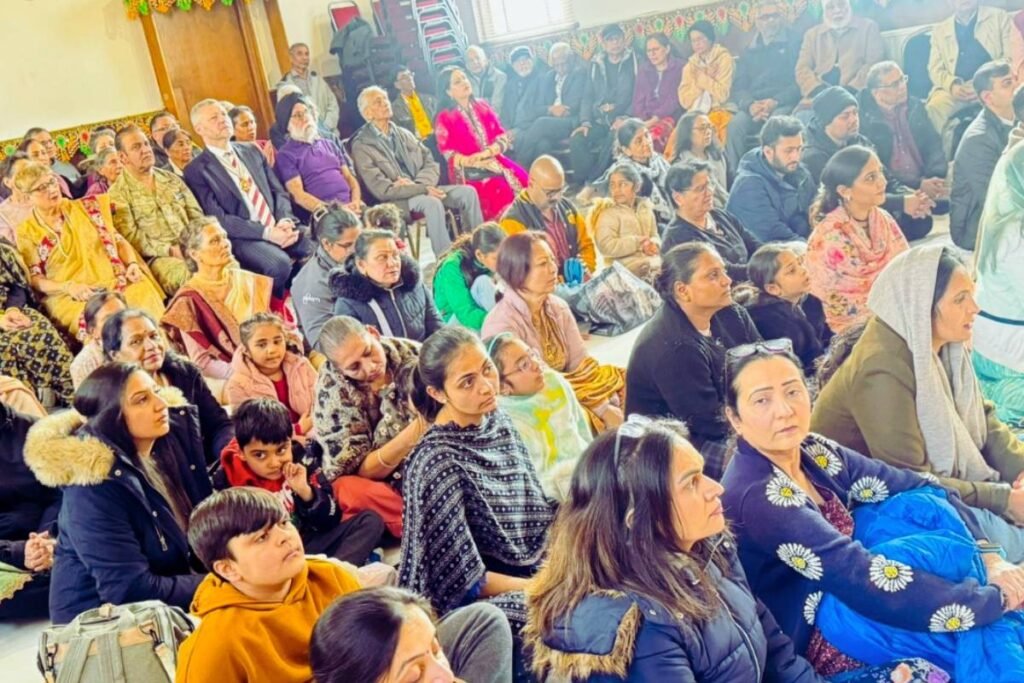
This poignant gathering exemplified the spirit of unity, compassion, and faith, reaffirming the age-old adage that in times of adversity, humanity stands united in prayer and hope for the welfare of all. The inner complex of the ashram echoed with the positive vibes of Hanuman Chalisa marking the significance of the Hindu lord Hanuman ji to spread a shower of grace on the Royal Family.
The holy prayer was organised a week after Prime Minister, Mr Rishi Sunak extended his support to the Royal Family including the Princess of Wales and Prince of Wales.
The news of the Princess of Wales Middleton and HM King Charles III being diagnosed with cancer was announced by Buckingham Palace. King Charles is said to be feeling ”over the moon” that his cancer treatment has started well, while Middleton early stage of treatment.
The significance of ‘Hanuman Chalisa’ and ‘Mahamrutunjay’ Mantra according to Vedic history :
- Hanuman Chalisa:
- The Hanuman Chalisa is a devotional hymn dedicated to Lord Hanuman, the epitome of strength, devotion, and loyalty in Hindu mythology.
- Composed by the saint Tulsidas in the Awadhi language, the Hanuman Chalisa consists of 40 verses (chalisa) that praise and invoke the blessings of Lord Hanuman.
- Reciting the Hanuman Chalisa is believed to invoke Hanuman’s protection, courage, and divine grace. It is often chanted to seek strength, overcome obstacles, and attain spiritual upliftment.
- Devotees believe that regular recitation of the Hanuman Chalisa can alleviate fear, bestow blessings, and bring peace and prosperity into one’s life.
- Mahamrutunjay Mantra:
- The Mahamrutunjay Mantra is one of the most powerful ancient Sanskrit mantras dedicated to Lord Shiva, the destroyer and transformer in Hinduism.
- Also known as the Mrita Sanjeevani Mantra, it is found in the Rigveda and is believed to have the power to conquer death and bestow immortality.
- The mantra is chanted to invoke Lord Shiva’s blessings for good health, longevity, and protection from untimely death.
- It is believed that the vibrations generated by the chanting of the Mahamrutunjay Mantra can purify the mind, body, and soul, promoting physical and spiritual well-being.
- Devotees often chant this mantra during times of illness, distress, or crisis, seeking divine intervention and healing.
Overall, both the ‘Hanuman Chalisa’ and ‘Mahamrutunjay’ Mantras are revered for their potency in invoking divine energies, providing solace, and guiding devotees on their spiritual journey in Hindu tradition.